The Gorham Bible
Thomas Jefferson took scissors to Scripture. This is the interactive version — without Paul, and without the theology he built on top of Jesus' words.
Plus launch-day access when the app opens to buyers.
One email to confirm. Unsubscribe anytime.
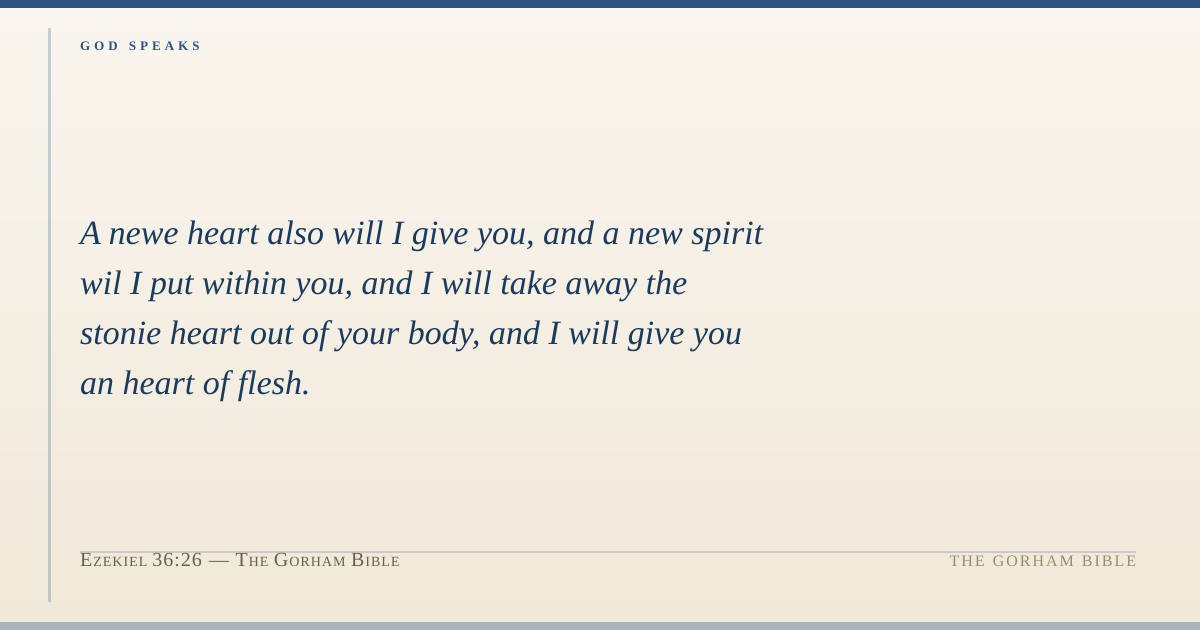
Red is Jesus speaking. Blue is God speaking. Black is narrative. Read a few verses and feel the difference before you decide.
There are two ways to read the New Testament. The first is the canonical way — the order that emerged from a series of ecclesiastical decisions culminating in what the Council of Trent confirmed in the 1540s. That order opens with four Gospels, then the Acts of the Apostles, and then pivots immediately into Paul's thirteen epistles. Romans arrives before you have caught your breath from Acts. The Gospels and Paul are presented as a continuous theological project, one flowing naturally from the other.
The second way is historical. In this reading, Paul's letters were composed before any of the Gospels were written. They were addressed to specific communities — the church in Rome, the Galatian congregations, the households at Corinth — in response to specific crises. They were not composed as the theological sequel to the Sermon on the Mount. They were composed by a man who had never met Jesus in the flesh, who had in fact persecuted Jesus's followers, and who had a conversion experience on a road in Syria that he took as his commissioning to preach a gospel he describes as revealed to him directly, not taught by any human.
These two reading strategies produce startlingly different pictures of what Christianity is.
Read the full essay and the complete Bible in the app — color markup, three reading modes, all 66 books.
Get the full Bible — $14.99In 1819, Thomas Jefferson compiled his own version of the New Testament — taking a razor and excising everything he believed was added after Jesus' death. He cut out Paul's epistles, miracles he didn't find credible, and what he called the "dogmas" built on top of Christ's actual words.
Most Christians treat Jefferson like a curiosity. But his editorial principle is rigorous: Paul's letters were written decades after Jesus died, by a man who barely knew him. The 13 epistles attributed to Paul reshaped Christianity into a religion about Christ rather than from Christ.
The Gorham Bible is not a theological experiment. It's a working tool for readers who want to engage Scripture through a Jeffersonian lens — who want to hear the voice of God and Jesus without the Pauline filter layered on top.
Only God's and Jesus' direct speech. No Pauline filter. The pure revelation as delivered — no epistolary commentary, no theology built on top.
Best for: Readers who want the kernel. Who trust Jesus and question the layers added afterward.
The complete 1599 Geneva Bible, modernized spellings. Paul's epistles are here — but relocated to sit after Revelation, not at the front.
Best for: Readers who want the full text with a rearranged order that reflects Jefferson-style skepticism of Pauline priority.
Paul's letters placed after Revelation. Accompanied by the editorial essay "The 13th God" — a full argument for why Paul's epistles represent a departure from Jesus' actual teachings.
Best for: Readers who want the full case made. Who want to understand the editorial rationale, not just the result.
"Paul's epistles represent a departure from Jesus' actual teachings and have distorted Christianity. This tool gives readers the knife to cut through Pauline theology and read Scripture as one continuous story of God's direct speech."
Or reserve — pay when checkout opens →
Secure payment via Stripe. You own the file.
Chapter 1 of The 13th God is free — no purchase required.
You'll also be first in line when the app opens for buyers.
One confirmation email. No spam. Unsubscribe anytime.